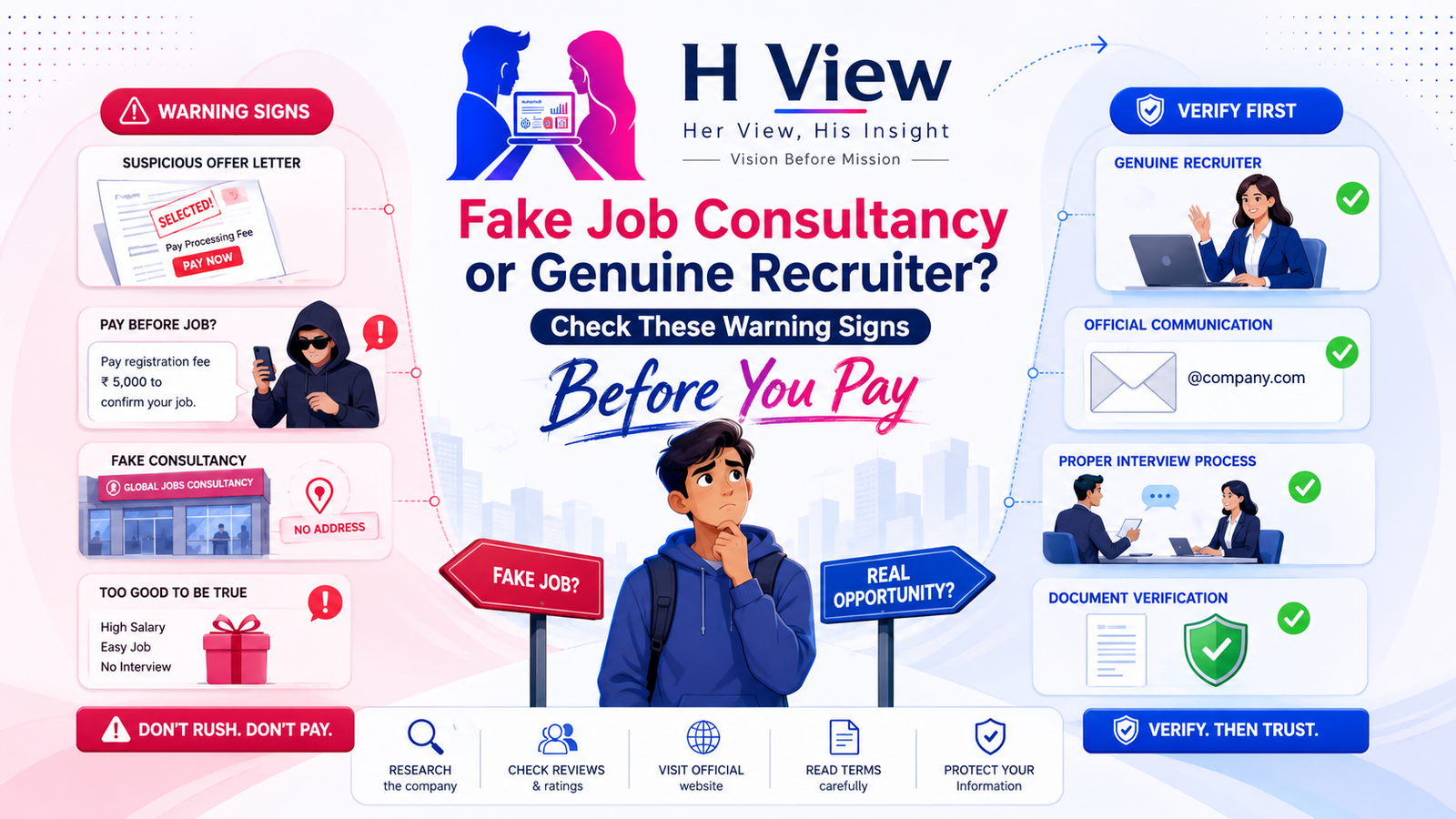
Unemployed graduates and freshers are often told that finding a job is difficult without a consultancy.
A recruiter calls and says your profile has been shortlisted. The salary sounds good, the interview appears easy and the joining date is close. Then comes a small request:
“Pay the registration fee first.”
Sometimes it is called a refundable security deposit, background-verification charge, document-processing fee, training fee or offer-letter fee.
The amount may begin at ₹500 or ₹2,000. Once the candidate pays, new charges appear. By the time the promised job disappears, the family may have lost thousands—or even lakhs.
India’s cybercrime authorities warn that fake recruiters often offer attractive jobs and then ask candidates to pay money before employment begins. Fraudulent offers may arrive through SMS, email, social media, job portals or messaging apps.
The most important rule is simple:
A genuine employer pays you. You should not have to purchase the job.
Why Unemployed Youth Become Easy Targets
Job scams do not succeed because candidates are careless.
They succeed because fraudsters understand the pressure unemployed people face.
A candidate may already be dealing with:
- A long career gap
- Repeated rejection
- Family pressure
- Loan repayments
- Low confidence
- Fear of missing another opportunity
- Urgency to start earning
Scammers use that emotion against them.
They may say:
- “Only two vacancies remain.”
- “Pay today or your profile will be cancelled.”
- “The amount is completely refundable.”
- “Our company has an agreement with top employers.”
- “No interview is required.”
- “Your offer letter is already approved.”
Rushing the hiring process and demanding urgent payment are recognised warning signs in government cyber-awareness guidance.
How a Fake Consultancy Builds Trust
A fraudulent recruiter may look surprisingly professional.
They can create:
- A polished website
- A copied company logo
- Fake employee profiles
- Professional-looking offer letters
- ID cards and appointment documents
- Temporary office space
- WhatsApp groups filled with “selected candidates”
- False reviews and testimonials
Some may even conduct a basic interview to make the process appear genuine.
The objective is to make the candidate feel that employment is almost confirmed. Once trust is created, the payment request feels like a small final step.
Never assume that a logo, office address or offer letter proves legitimacy. Government departments have also warned about fake selection orders being issued in their names.
12 Warning Signs You Should Never Ignore
1. You must pay before the interview
Interview scheduling, shortlisting and offer issuance should not require candidate payment.
2. Money is requested through a personal account
Be cautious when payment is demanded through an individual UPI ID, personal bank account or QR code.
3. The recruiter uses only WhatsApp
A genuine recruiter may communicate through WhatsApp, but important communication should also come through an official company email.
4. The email domain looks suspicious
Check spelling carefully. A fake address may differ from the real company domain by only one letter.
5. The salary is unrealistic
A very high salary for a role requiring no skills, interview or experience is a major warning sign.
6. The job description keeps changing
The original job may become a paid course, sales role or commission-based position after the candidate engages.
7. You are promised guaranteed placement
No legitimate consultancy can guarantee that every employer will select a candidate.
8. You are pressured to decide immediately
Urgency is often used to prevent independent verification.
9. The consultancy refuses written terms
Refund conditions, fees and placement services should be clearly documented.
10. They ask for sensitive documents too early
Avoid sharing Aadhaar, PAN, bank statements, passwords or original certificates before verifying the organisation and purpose.
11. The recruiter discourages contacting the employer
A genuine recruiter should not object to reasonable verification.
12. They demand additional payments after the first fee
Repeated demands for tax, insurance, laptop, training, medical or onboarding charges strongly suggest fraud.
Training Disguised as Employment
A common trap begins with a job advertisement.
After the candidate applies, the recruiter says:
“You are selected, but you must first complete our paid training.”
The candidate joins because employment appears guaranteed. After completing the course, the promised company interviews never happen—or only low-quality opportunities are shared.
India’s consumer-protection authorities have issued guidelines against misleading coaching advertisements, including exaggerated claims about guaranteed selection, employment outcomes, success rates and faculty credentials.
Paid training is not automatically fraudulent.
The problem is presenting course admission as a confirmed job opportunity.
Before paying, ask whether you are being hired or sold a course.
How to Verify a Recruiter Before Proceeding
Contact the company directly
Use the phone number or careers page on the company’s official website—not the contact details sent by the recruiter.
Verify the email domain
Search the exact domain and compare it with the employer’s official website.
Check the recruiter’s profile
Review employment history, connections, activity and whether the company lists them publicly.
Search the company carefully
Look for registration details, physical presence, employee profiles and consistent business activity.
Ask for the complete job description
Confirm role, location, salary structure, employment type and reporting manager.
Request every fee in writing
A fraudulent recruiter may avoid creating clear written evidence.
Speak with placed candidates
Do not rely only on testimonials controlled by the consultancy.
Never submit original certificates
Original educational documents should not be held as security for a job.
What to Do If You Already Paid
Act quickly instead of feeling ashamed.
Save all evidence, including:
- Payment receipts
- UPI IDs and bank details
- Phone numbers
- Emails
- WhatsApp chats
- Offer letters
- Advertisements
- Website screenshots
- Recruiter profiles
Contact your bank or payment provider immediately and report the transaction as suspected fraud.
Financial cybercrime can be reported through India’s National Cyber Crime Reporting Portal, and urgent financial fraud should be reported through helpline 1930. The official portal includes job fraud among its cyber-awareness categories.
Do not continue paying simply because you have already lost money.
The next payment will not recover the first one.
Her View, His Insight
Her View: Genuine recruitment consultancies can connect candidates with employers, improve resumes and provide access to opportunities they may not discover independently.
His Insight: Unemployed youth are easy to exploit. Any recruiter demanding money for interviews, offer letters or guaranteed placement should be treated with extreme caution.
Both views are valid.
Consultancies can support recruitment.
They should never sell false hope as a confirmed job.
Final H View Take
A professional-looking offer is not always a real opportunity.
Before paying, pause and verify the employer, recruiter, domain, job description and payment request independently.
Never allow urgency, embarrassment or a long career gap to silence your doubts.
Losing one opportunity is painful.
Losing family savings, personal documents and months of career time to a fake consultancy can be far worse.
A genuine job should begin with verification and employment—not repeated payments.
Frequently Asked Questions
Some career services may charge for optional resume or training support, but candidates should not be required to pay for interviews, offer letters or confirmed employment.
Not automatically. “Refundable” is commonly used to reduce suspicion. Verify the consultancy and obtain written terms before considering any payment.
Yes, but verify their identity through the company’s official website, email domain and HR department.
Share sensitive identity documents only after verifying the employer and understanding why they are required. Mask unnecessary details whenever possible.
Contact the bank immediately, preserve evidence and report financial cybercrime through helpline 1930 and the official cybercrime portal.
Treat guaranteed-placement claims cautiously. Selection ultimately depends on the employer, candidate skills and interview performance.