Why Holding Onto Hurt Slowly Breaks Relationships
No family is perfect.
No husband, wife, parent, child, or grandparent goes through life without making mistakes.
Sometimes words are spoken in anger.
Promises are broken.
Feelings are hurt.
Misunderstandings create distance.
If every mistake became permanent, no family would stay together for long.
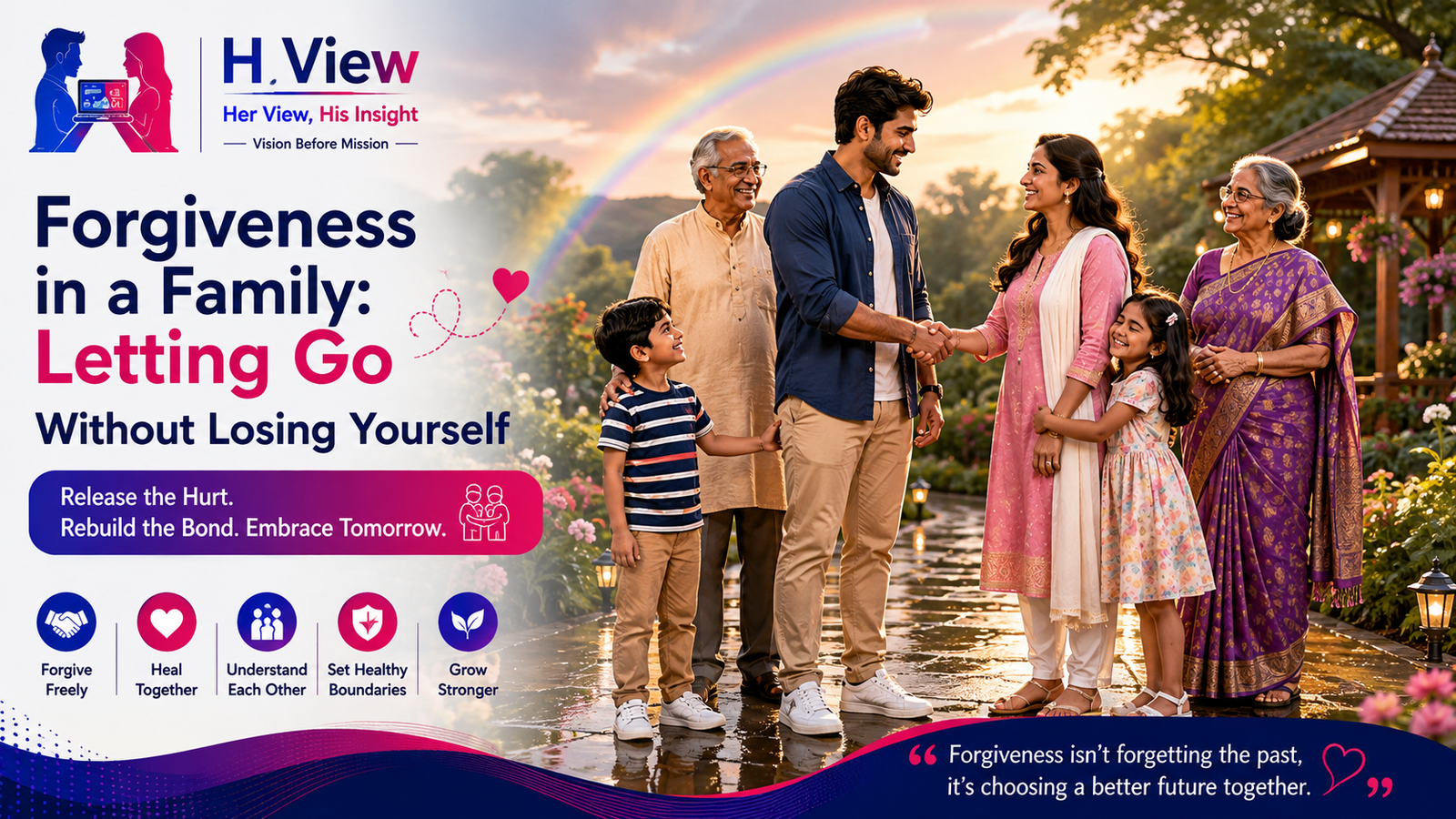
That is why forgiveness is one of the greatest strengths a family can develop.
Forgiveness does not mean pretending nothing happened.
It means choosing not to let pain control the future.
Healthy families do not avoid mistakes.
They learn how to heal from them.
What Does Forgiveness Really Mean?
Forgiveness is the decision to release bitterness and give relationships an opportunity to heal.
It is not:
- Forgetting everything.
- Accepting repeated disrespect.
- Allowing abuse.
- Ignoring harmful behaviour.
Instead, forgiveness means choosing peace while expecting accountability and positive change.
A sincere apology and genuine effort to improve make forgiveness meaningful.
Why Forgiveness Matters
Every relationship experiences conflict.
Without forgiveness:
- Anger becomes permanent.
- Small misunderstandings become lifelong resentments.
- Conversations become uncomfortable.
- Family gatherings lose warmth.
- Emotional distance grows.
Forgiveness allows families to move forward instead of remaining trapped in yesterday's pain.
Forgiveness Between Husband and Wife
Marriage is built through thousands of ordinary days.
Small mistakes happen.
Someone forgets an important date.
Someone speaks harshly after a stressful day.
Someone misunderstands the other's intentions.
If couples collect every mistake instead of resolving it, love slowly becomes heavy.
Healthy couples apologise sincerely, forgive wisely, and learn together.
Winning an argument should never become more important than protecting the relationship.
Forgiveness Between Parents and Children
Parents are not perfect.
Children are not perfect.
Parents sometimes react emotionally.
Children sometimes make poor decisions.
Families become stronger when both sides learn to say:
- "I'm sorry."
- "I understand."
- "Let's do better next time."
Children who see parents apologising learn humility.
Parents who forgive wisely teach responsibility instead of fear.
Forgiveness with Parents and In-Laws
Every family has different traditions, expectations, and personalities.
Misunderstandings between generations are natural.
Holding onto every disagreement creates unnecessary distance.
Respectful conversations, patience, and willingness to understand each other's perspective often heal relationships better than silence.
Forgiveness becomes easier when people choose empathy over ego.
Forgiveness Does Not Mean Accepting Everything
One of the biggest misconceptions is that forgiving someone means allowing repeated harmful behaviour.
It does not.
Healthy forgiveness can exist alongside healthy boundaries.
If someone repeatedly lies, insults, manipulates, or harms others without changing, protecting yourself is not wrong.
Forgiveness releases anger.
Boundaries protect peace.
Both are important.
Learn to Apologise
Many relationships suffer because people believe apologising makes them weak.
In reality, saying "I'm sorry" requires courage.
A meaningful apology includes:
- Accepting responsibility.
- Acknowledging the hurt caused.
- Expressing genuine regret.
- Making an effort to change.
Words alone cannot rebuild trust.
Consistent actions do.
Her View
Many women forgive quickly but silently carry emotional pain.
True healing happens when forgiveness is accompanied by honest conversations and lasting behavioural change.
A healthy relationship values both kindness and accountability.
His View
Many men find it difficult to express regret openly.
However, admitting mistakes strengthens respect rather than reducing it.
A sincere apology often rebuilds a relationship faster than expensive gifts.
The H View Solution
Practice these habits:
- Apologise without excuses.
- Forgive without keeping score.
- Discuss problems calmly.
- Focus on solutions instead of blame.
- Learn from mistakes together.
- Protect your self-respect while choosing peace.
Remember:
Forgiveness is not about changing the past.
It is about protecting the future.
Final H View Take
Families grow stronger not because they avoid mistakes, but because they know how to heal after them.
Forgiveness is not weakness.
It is emotional maturity.
When apology, accountability, and forgiveness work together, relationships become deeper, stronger, and more meaningful.
The strongest families are not those without conflict—they are the ones who never stop choosing healing over hurt.
Frequently Asked Questions
No. Forgiveness means letting go of bitterness while learning from the experience.
Yes. Forgiveness can come first, but trust usually takes time to rebuild through consistent actions.
You can choose forgiveness while also setting healthy boundaries and expecting meaningful change.
Forgiveness helps couples move beyond mistakes, strengthens emotional connection, and prevents resentment from growing.