How Healthy Couples Disagree Without Hurting Each Other
Many people believe that a happy couple never argues.
That is one of the biggest myths about relationships.
Every healthy relationship has disagreements.
Two people with different personalities, experiences, habits, and expectations will naturally see some situations differently.
The problem is not the argument.
The problem is how we argue.
Some disagreements end with greater understanding.
Others leave emotional wounds that take years to heal.
Strong relationships are not built by avoiding conflict.
They are built by learning to handle conflict with maturity.
Why Couples Argue
Arguments usually begin because of:
- Miscommunication
- Different expectations
- Financial stress
- Parenting decisions
- Household responsibilities
- Work pressure
- Lack of quality time
- Unresolved past issues
Most arguments are not really about the issue itself.
They are about feeling unheard, unappreciated, or misunderstood.
The Goal Is Not to Win
During an argument, many people focus on proving they are right.
But marriage is not a courtroom.
If one partner wins and the other feels defeated, the relationship loses.
Instead of asking,
"Who is right?"
Ask,
"What solution protects our relationship?"
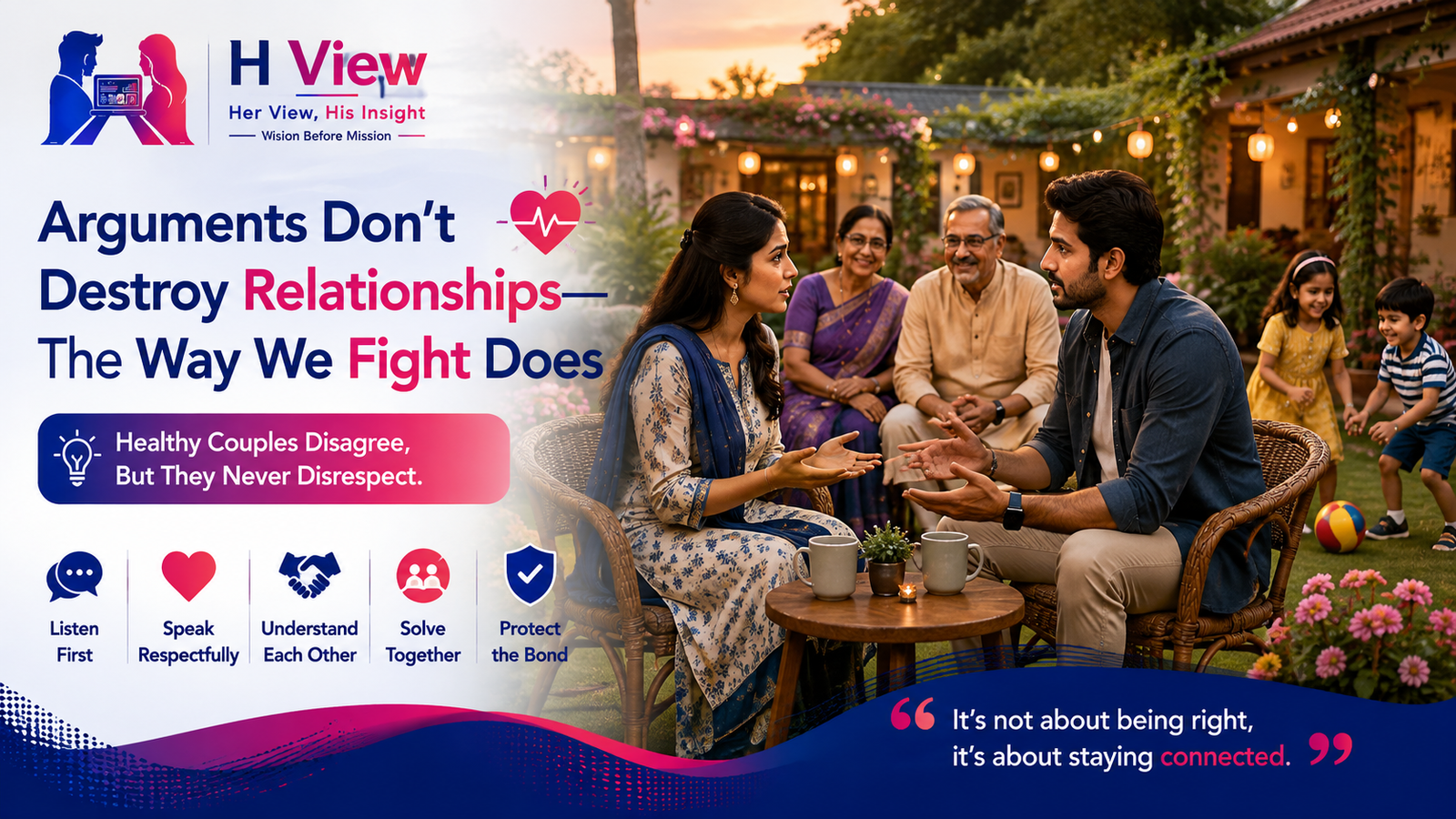
Fight the Problem, Not Each Other
Never turn a disagreement into a personal attack.
Avoid statements like:
- "You always..."
- "You never..."
- "Your family is..."
- "I regret marrying you."
Instead, explain how you feel.
Say:
- "I felt hurt when..."
- "Can we solve this together?"
- "Help me understand your point."
Words spoken in anger are often remembered long after the argument ends.
Never Bring the Past into Every Fight
One mistake should not become part of every future disagreement.
Healthy couples solve one issue at a time.
Dragging old mistakes into every conversation creates frustration instead of solutions.
Forgive, learn, and move forward.
Choose the Right Time
Not every problem needs to be solved immediately.
Avoid serious discussions when someone is:
- Extremely tired
- Hungry
- Stressed
- Driving
- Surrounded by other people
Sometimes a calm conversation an hour later is more productive than an emotional argument now.
Respect During Conflict
Even during disagreements:
- Don't insult.
- Don't shout.
- Don't threaten separation.
- Don't involve children.
- Don't compare your spouse with others.
- Don't post personal problems online.
Respect should never disappear because opinions differ.
Her View
Many women do not expect perfection.
They want to feel heard.
Listening without immediately defending yourself often resolves more than giving long explanations.
Feeling emotionally safe makes difficult conversations easier.
His View
Many men try to solve problems quickly when sometimes their partner simply wants understanding first.
Listening patiently before offering solutions strengthens emotional connection.
Calm communication is a sign of maturity, not weakness.
The H View Solution
Before reacting, ask yourself:
- Will these words solve the problem?
- Am I speaking to heal or to hurt?
- Is my ego more important than my relationship?
Take a short pause.
Listen.
Understand.
Then respond with respect.
Small changes in communication create big improvements in relationships.
Final H View Take
Arguments are a normal part of every relationship.
Disrespect is not.
The strongest couples are not those who never disagree.
They are the ones who continue choosing kindness, understanding, and teamwork—even during difficult conversations.
Every disagreement can become either a wall or a bridge.
The choice is ours.
A healthy relationship isn't measured by how rarely you argue—it's measured by how respectfully you resolve those arguments.
Frequently Asked Questions
Yes. Disagreements are natural. What matters is resolving them respectfully.
No. Avoiding every conflict often creates bigger problems later. Honest, respectful communication is healthier.
Personal attacks, bringing up old mistakes, and trying to "win" instead of solving the issue.
Listen first, stay respectful, focus on one issue at a time, and work together toward a solution.