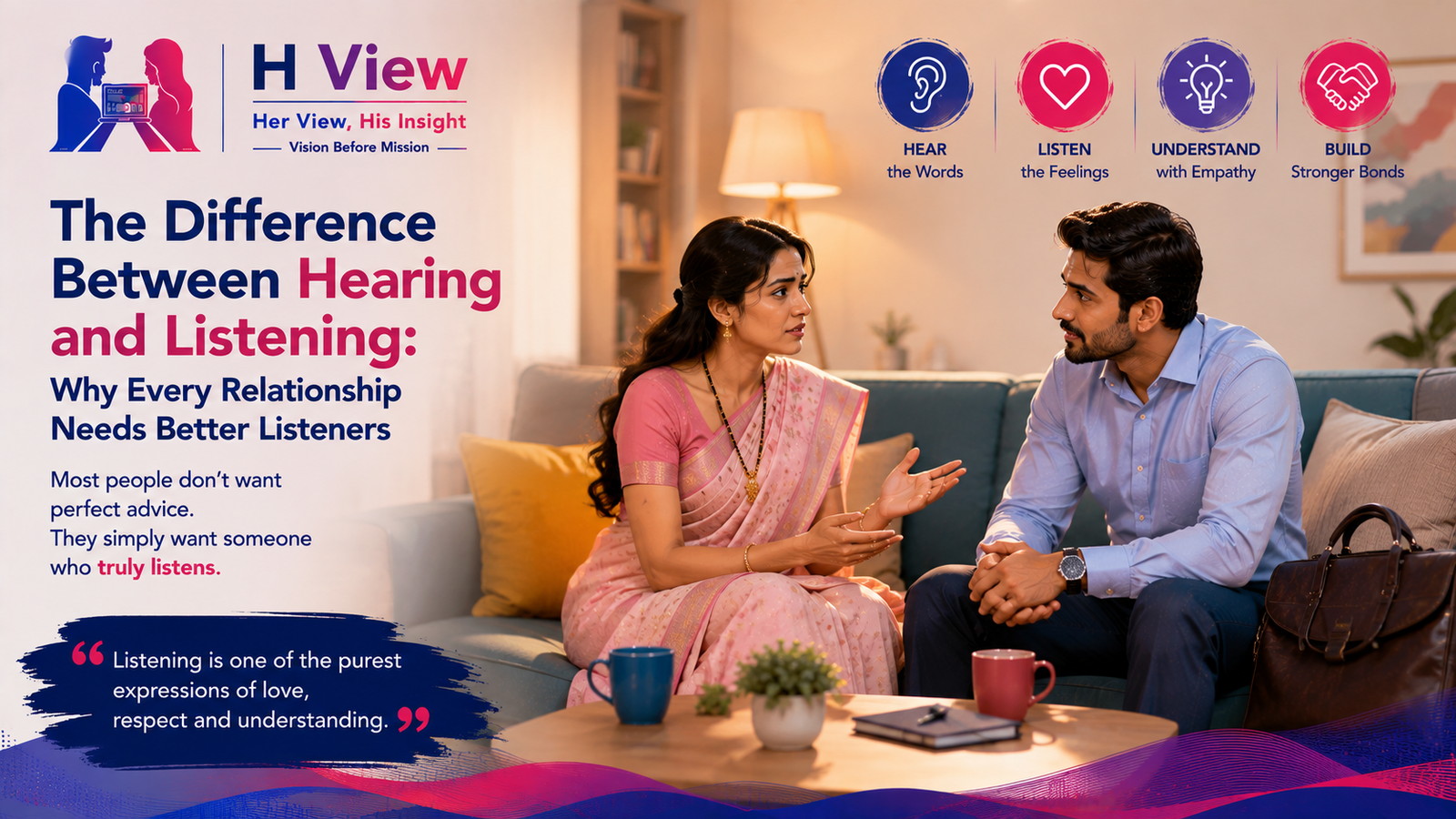
Most people don't want perfect advice. They simply want someone who truly listens.
The Difference Between Hearing and Listening: Why Every Relationship Needs Better Listeners
One evening, Neha sat quietly on the balcony after returning from work. Her husband noticed something was bothering her and asked, "Is everything okay?"
She nodded and softly replied, "Yes."
A few minutes later, she began talking about the pressure she had been feeling at work. Before she could finish, her husband interrupted with a list of solutions. He suggested changing jobs, speaking to her manager, and planning a vacation.
When he finished, he looked at her proudly and asked, "Problem solved?"
Neha smiled politely but remained silent.
She hadn't wanted solutions.
She simply wanted someone to listen.
This happens in countless homes every day. One person is trying to share their heart, while the other is trying to fix the situation. Both have good intentions, yet both leave the conversation feeling misunderstood.
The strongest relationships are not built only by speaking well. They are built by listening well.
Listening Is More Than Hearing Words
Most of us hear people every day.
We hear conversations at work, phone calls, television, and countless notifications. Hearing is automatic.
Listening is different.
Listening requires attention, patience, and genuine interest in understanding another person's thoughts and feelings.
When someone feels heard, they also feel respected.
That simple feeling creates emotional safety, and emotional safety strengthens every relationship.
A marriage, a friendship, or even a parent-child relationship becomes healthier when people know they can speak without being judged or interrupted.
Why We Often Fail to Listen
Many conversations end in frustration because people are preparing their response instead of understanding the speaker.
Sometimes we interrupt because we think we already know the answer.
Sometimes we assume the other person is overreacting.
Sometimes we rush to give advice before understanding the entire situation.
Although these reactions are rarely intentional, they often make the other person feel unheard.
Instead of immediately responding, pause for a moment.
Allow the conversation to finish.
A few extra seconds of patience can prevent hours of misunderstanding.
Listening Builds Emotional Trust
Imagine coming home after a difficult day and knowing that someone will patiently listen without criticism.
That feeling creates comfort.
It reminds us that home is not only a place where we live—it is a place where we are understood.
Children also benefit from this habit.
When parents genuinely listen to their children, they encourage honesty. A child who feels heard at home is far more likely to share concerns before they become serious problems.
The same principle applies to marriage.
Trust grows when both husband and wife know their thoughts and emotions will be treated with respect.
Become a Better Listener Every Day
Good listening is not a talent.
It is a habit that anyone can develop.
Some simple changes make a remarkable difference:
- Put your phone aside during important conversations.
- Allow the other person to finish speaking before responding.
- Maintain eye contact and give your full attention.
- Ask gentle questions instead of making assumptions.
- Respond with understanding before offering advice.
These habits may seem ordinary, but they communicate one powerful message:
"You matter, and what you are saying matters too."
Her View
Many women do not expect their husbands to solve every problem immediately.
Often, they simply want to know that their feelings are understood.
Being listened to with patience creates emotional closeness that words alone cannot express.
His View
Many men naturally try to solve problems because they want to help.
That quality is valuable.
However, some situations require understanding before solutions.
Sometimes the greatest support a husband can offer is simply listening with empathy.
The H View Solution
The next time someone in your family begins sharing something important, resist the urge to interrupt.
Listen completely.
Understand first.
Respond later.
That small change can transform conversations, reduce misunderstandings, and strengthen every relationship inside the home.
Final H View Take
People rarely remember every piece of advice they receive.
They remember how someone made them feel.
A person who truly listens offers one of the greatest gifts another human being can receive—the feeling of being understood.
Strong relationships do not grow because everyone has the right answers.
They grow because everyone knows their voice will be heard.
Because sometimes, the kindest response is not another sentence.
It is simply listening with your whole heart.
Listening is one of the purest expressions of love, respect, and understanding.
Frequently Asked Questions
Listening strengthens trust, improves communication, and helps people feel emotionally safe and respected.
Hearing is automatic, while listening requires attention, empathy, and understanding.
Yes. Many misunderstandings disappear when people take the time to understand each other before responding.
Give your full attention, avoid interrupting, ask thoughtful questions, and focus on understanding before offering advice.